Bolivia
24hrs in Bolivia
“Right, border’s shut. Everyone off.” Bloody hell. I’d just gotten to sleep. Looking out the bus’s window, I had no clue where we were. It certainly wasn’t La Paz. “We can maybe get you to Copacabana.” An elderly Bolivian man informed me through a translation app that Copacabana was a tourist town and I’d be able to get to La Paz through there. Images of topical Brazilian beaches flashed into my head. “I suppose it’s one step closer”, my housemate Angus suggested.
The next bus made it as far as the Peruvian/Bolivian border. We were instructed to take our suitcases and walk the rest of the way.
I’d heard rummagings of a protest happening in Bolivia. But the protest’s extent was far greater than I could imagine.
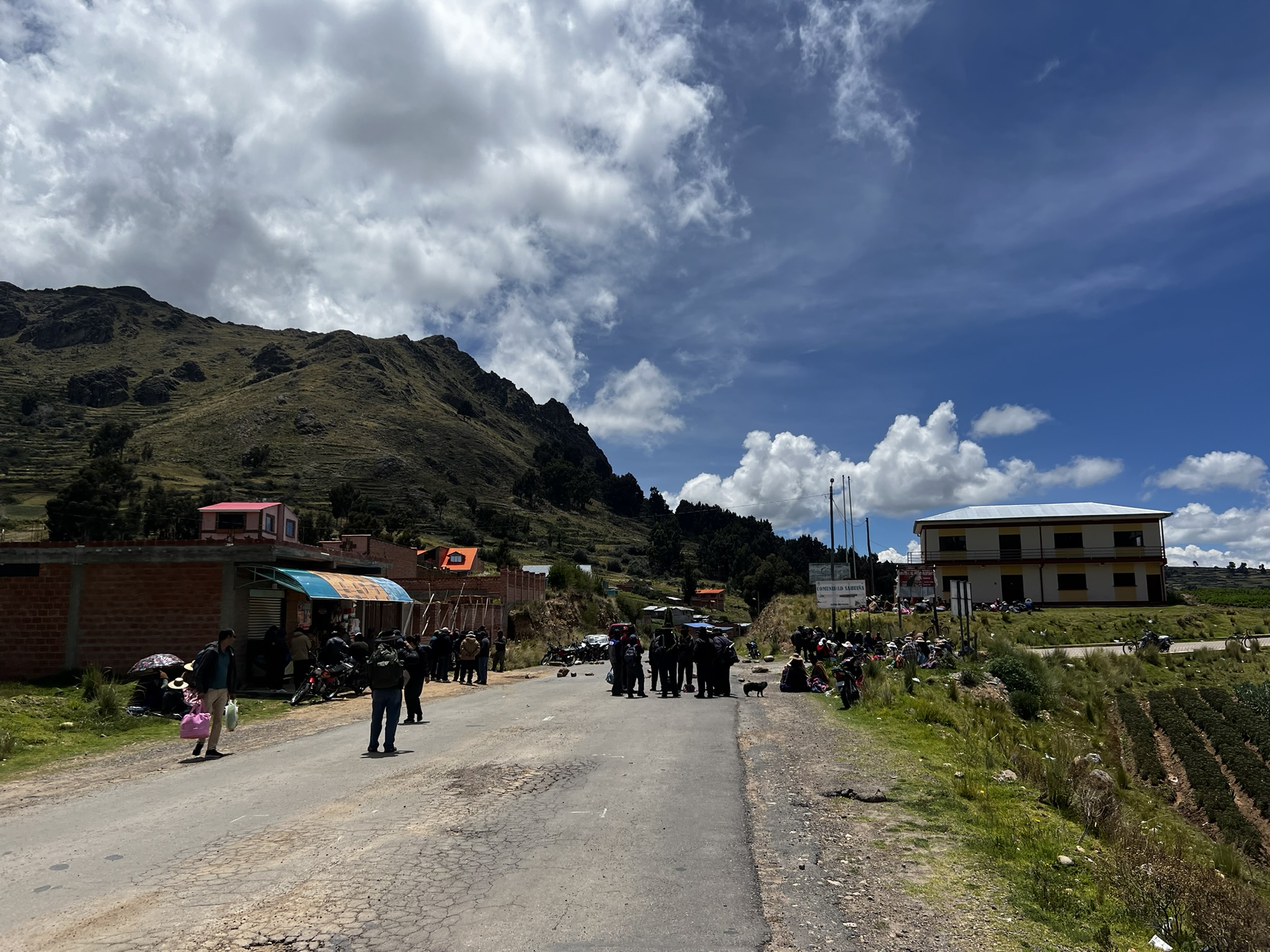
I dragged my oversized suitcase down dirt roads, avoiding barricades protesters had put up. I crossed a small creek to take a shortcut over a disused airport, now occupied by sheep.

Copacabana was a small border town looking onto Lake Titicaca. Angus and I took a well needed reprieve at a small cafe. It was a suspiciously good cappuccino. The owner came over to introduce himself. Fernando was a short, welcoming man who had worked for 20 years in government before coming to Copacabana to pursuit coffee (and had since won several competitions).
Fernando told us that protests weren’t uncommon in the area. But the extent of this one was unmatched. The government had suddenly removed a fuel subsidy which doubled petrol prices overnight. What started as a small demonstration in La Paz turned into nationwide blockades protesting their cost of living crisis. But it was going to be okay. The leaders of the protest were meeting with government officials this evening. Fernando and I exchanged numbers and I eagerly awaited his updates. Angus and I sank beers with a Dutch D&B DJ by the lakeside, exchanging tracks and talking about music.
“POP POP POP.” I was awoken by gunshots in the distance. The phone rang. The negotiations were a bust, and the demonstrations were intensifying. All of a sudden it was unsafe and we had to leave the country immediately.
Even more blockades had popped up overnight. The protesters had dug trenches and blocked the roads with walls of dirt. Fernando generously escorted us the 8km hike back to the border. The wheels on my suitcase had worn to nubs on Bolivian gravel.
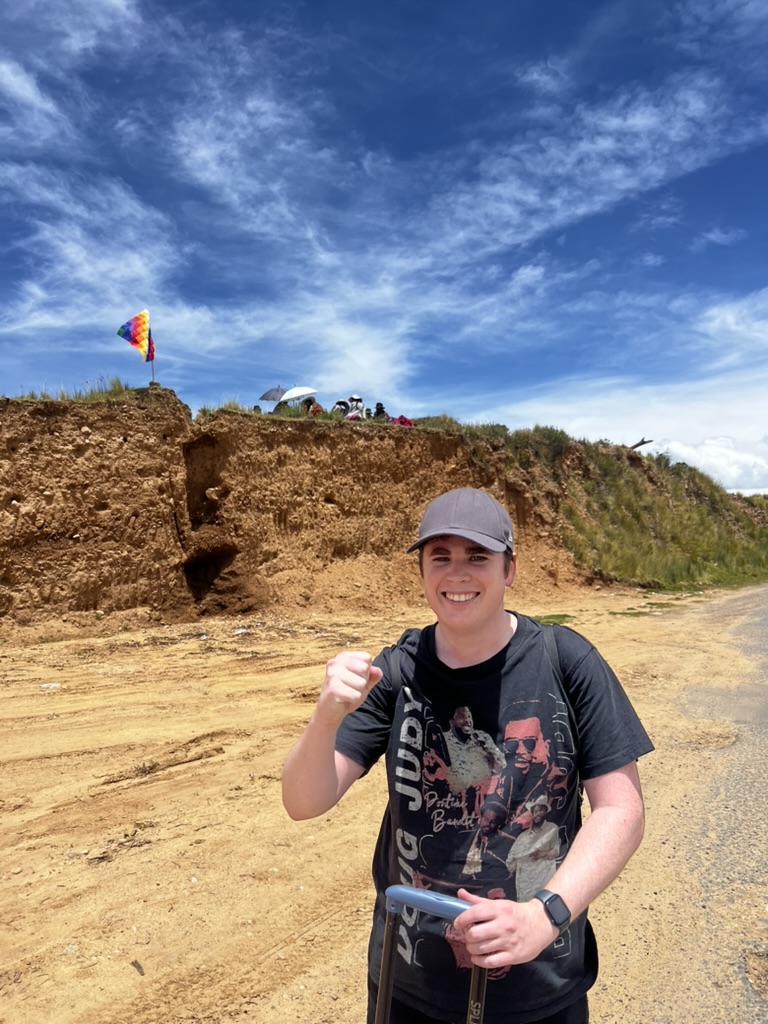
We warned backpackers coming into the country of the shit-show that was occurring in town. Some of whom promptly turned around. Soon enough we had amassed a pack of refugees.
Fernando bid us adieu where a bus was waiting for us at the border. And that concludes my Bolivian escapade. Disappointingly, instead of touring salt flats, I was on buses for the next three days, forced to go the long way to San Pedro.